
Gate queue with no shared view
Nobody can see who arrived, who is next, or who has been sitting outside the plan.
EILM · Yard Management
Gate-to-dock visibility, dwell timers and dock utilisation so busy yards cut turnaround and detention disputes - without another clipboard process.
Most yards do not lack trucks or docks. They lack a shared live picture of who is waiting, which door is free, and how long a visit has already burned.
Nobody can see who arrived, who is next, or who has been sitting outside the plan.
Detention and overtime arguments start without a gate-in to gate-out timeline.
A free door and a waiting trailer are invisible to each other on radio.
Lane blocks and overcrowded staging show up as shouting, not as a state the desk can clear.
Shift handovers lose context; the night desk reinvents the yard every evening.
The road trip ends at the gate with no dock preparation from live ETA or exception state.
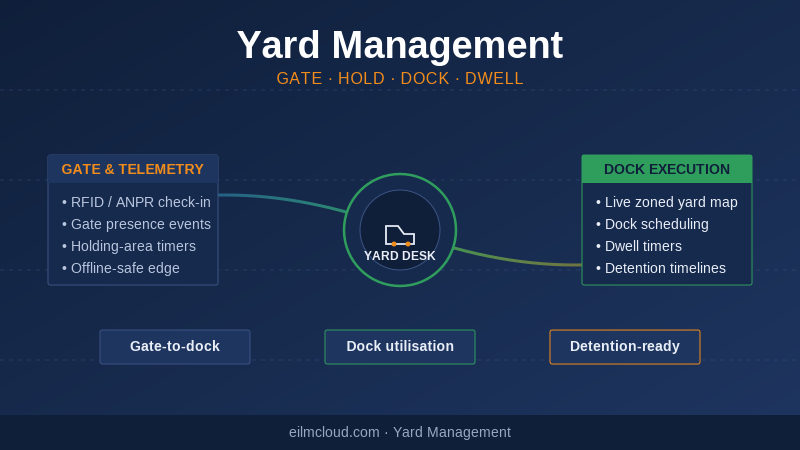
EILM mediates gate-in to gate-out presence, ties movement to docks or slots, and puts dwell on a timer the yard desk will staff. WMS stays the appointment system of record.
The desk sees waiters and free docks, so calling a vehicle in follows live state, not memory.
Idle doors and crowded holding areas appear in the same view during the shift.
Arrival, docking and release become evidence for carrier and customer conversations.
Spotter and dock calls follow occupancy and appointment state.
Gate and dock events first; ANPR or RFID where volume justifies it.
Inbound trips from EILM Logistics arrive as prepared yard work, not a surprise at the boom.
No. Many yards start with gate and dock events plus a small device set, then add ANPR or RFID where volume justifies it.
Yard Management runs the yard. Logistics runs the road. At the gate, trips hand off cleanly on the same EILM core.
Most priority yards go live in 8 to 10 weeks, scoped around one operating question and one KPI.
Guides for dwell, docks and night-shift yards.
One operating question. One KPI. Then widen.