
GPS without shipment context
Operators see dots, not which load, window or customer commitment is at risk.
EILM · Logistics
Control-tower IoT for corridors: route and TAT optimisation, vehicle telemetry, earlier exceptions and custody handoff - without replacing your TMS.
A map of vehicles is not a control tower. The desk needs shipment, plan and exception in one place before the appointment is already lost.
Operators see dots, not which load, window or customer commitment is at risk.
Stoppage, diversion and missed gates surface after the consignee already knows.
Intervention starts when recovery is already expensive or impossible.
Night shift gets noise; nobody owns the next action.
Cold-chain, door, fuel and route breaches live in separate tools.
Planning and billing stay solid while turnaround, stoppage and freight recovery still run on calls and portals.
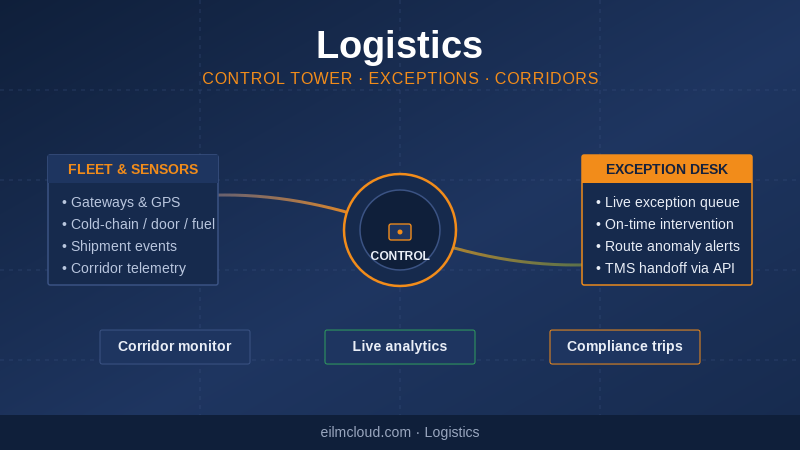
EILM unifies movement events, vehicle telemetry and exception policy into one picture. Your TMS remains the planning and billing system of record.
Dispatchers see live location against planned corridor, including dwell and turnaround that do not match the plan.
Stoppage, diversion and missed-window rules fire while the trip is still recoverable.
Tonnage, journey constraints and appointment windows sit beside telemetry - not in a separate spreadsheet.
GPS, cold-chain, fuel, door and tire telemetry land in the same logistics picture.
Actionable exceptions replace a wall of pings and phone trees.
Transfer evidence and inbound trips enter Yard Management without a broken timeline.
No. EILM Logistics is the live execution and exception layer. Your TMS can remain the planning and billing system of record.
Logistics covers transportation on the road. Yard Management covers the yard. Most operators use both, with a clean handoff at the gate.
One priority corridor, one exception type, one KPI. Typical rollout is about 10 weeks.
Control tower, TAT and corridor guides.
Prove the exception desk. Then widen.